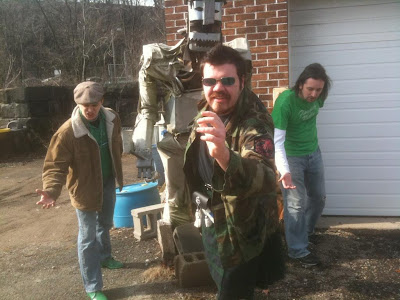
Recently, I have heard a comment regarding my wardrobe lately that has rather rankled me. It seems that my manliness has been called into question based off of my decision to wear a kilt, or as it was disparagingly referred to as a "man-skirt." I have therefore decided to pen a defense of a garment that needs no defense in my opinion, and clothed in the garment of discussion, I sat down to write on what I consider one of the manliest pieces of clothing in existence.
The reason this garment is considered a paragon of toughness is predominately due to the long history and the traditional purpose of the kilt. The original design of the kilt was that it was intended from the very beginning as a travelling garment. As Highlanders were a tribal people, the garment was designed to be worn on the move. Therefore, the Kilt served several purposes, as a garment, as a shelter, and as an identifying badge.
The garment aspect of the kilt should be rather self explanatory. It serves incredibly well as a lower body garment. From first hand experience, I have worn my kilt on
both the hottest and coldest days of the year, and it was comfortable on both days, as it is cool in summer, and warm in winter.
The shelter aspect of the garment deals predominately with the construction of a full kilt. Originally, a kilt was little more than a belted piece of wool, approximately a yard and a half by four yards. The idea behind this was that as a tribal people, you would have to carry everything with you as you moved place to place. As a result of this, the more you would carry, the less territory you would be able to cover. The kilt helped to provide an answer to this, as after a long day marching or travelling, the individual could just remove his kilt, shake out the pleats, wrap himself in the garment and go to sleep. This saved him the need of carrying his own bedding, and as any backpacker (or someone who had to carry a suitcase from the East Village to the Upper West Side) can tell you, every pound counts when you have to journey long distances.
The badge aspect, however, might be one of the most important aspects of the kilt. In a tribal society, being able to identify your own people can literally make the difference between life and death. This is where the very material of the kilt came into play. The kilt is not made with any ordinary wool, but a specially pattered one called the Tartan. Each individual clan had their own pattern, and that would be the only pattern they would wear. The traveller of clansman with a well trained eye would therefore be able to tell instantly if another man was a friend or foe.
These are all manly aspects of the garment, but what truly adds to the
masculinity is the people who designed it. The standard equipment of a Highlander says much about the warlike aspects of the people. In the heyday of the kilt (16
Th-18
Th centuries) a knife or dagger would be something no man would leave the house without. Indeed, most men still carry a pocket knife as part of their daily gear. What separates the Highlander from other men is the choice of knives. While most daggers from the time period were approximately 5 to 7 inches long, the typical Highlander would be carrying his dirk, with a length of 9 to 14 inches. Two inches in a blade during combat can make the difference between a wounded enemy and a dead one. In battle, the dead enemy is preferable as he cannot stab you back.
In addition to the dirk, the well dressed Highlander would also be carrying a
sgian dubh, or "black knife," tucked into his right sock. This was a small knife, about 3 to 4 inches in length, but its placement allowed it to be easily reached at all times, including if things became rather heated at the dinner table. In addition to those weapons as part of their daily gear, it was known that some Highlanders would also strap one more additional blade to their thigh, underneath the kilt.
The British were so afraid of the Highlanders that following the end of the
Jacobite Rebellion in 1746, the kilt was outlawed along with the bagpipes as weapons of war, alongside swords, shields, and muskets. The kilt is therefore the garment of choice for some of the toughest men in history.
Finally, I know from my own experience the feeling you have when you wear the kilt. When you are kilted, you have a connection to the past, and in most cases, your family history. And it gives you a sense of power, as in modern society, when men get manicures and trade tips on exfoliating, the kilt in a giant "FUCK YOU" thrown directly in the face of conformity. It serves as a badge once again, except this time in reverse, as a proclamation in your rights as an individual, declaring that you aren't going to go quietly with the rest of the herd. What could be more masculine than that?
Until next time,
Andrew


 4,802
4,802


 War Mask
 Love Bomb II
 Love Bomb III
 Love Bomb I
 Circular Logic
 Secondary Sketches- Trying to capture the human form in a matter of seconds.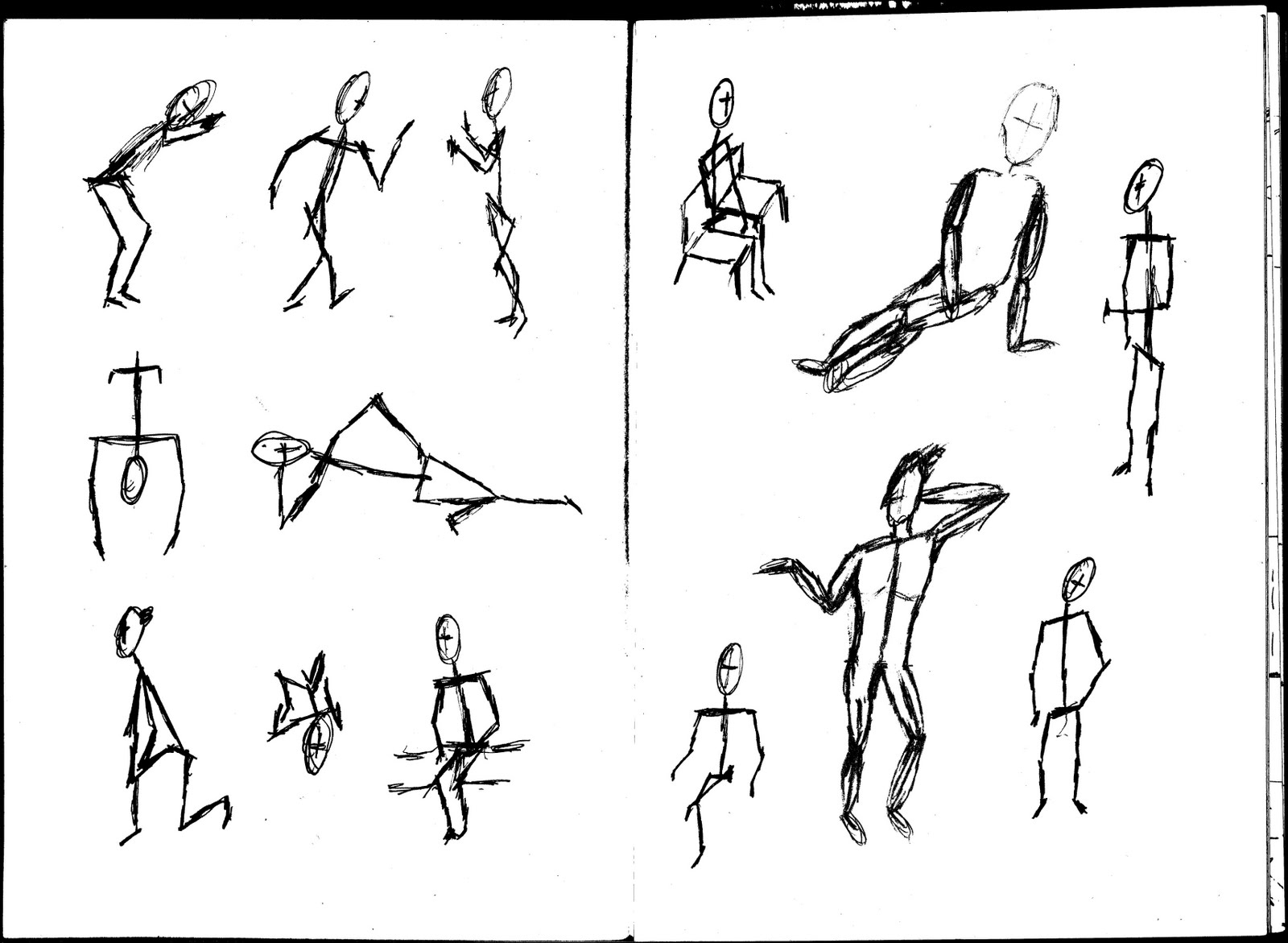
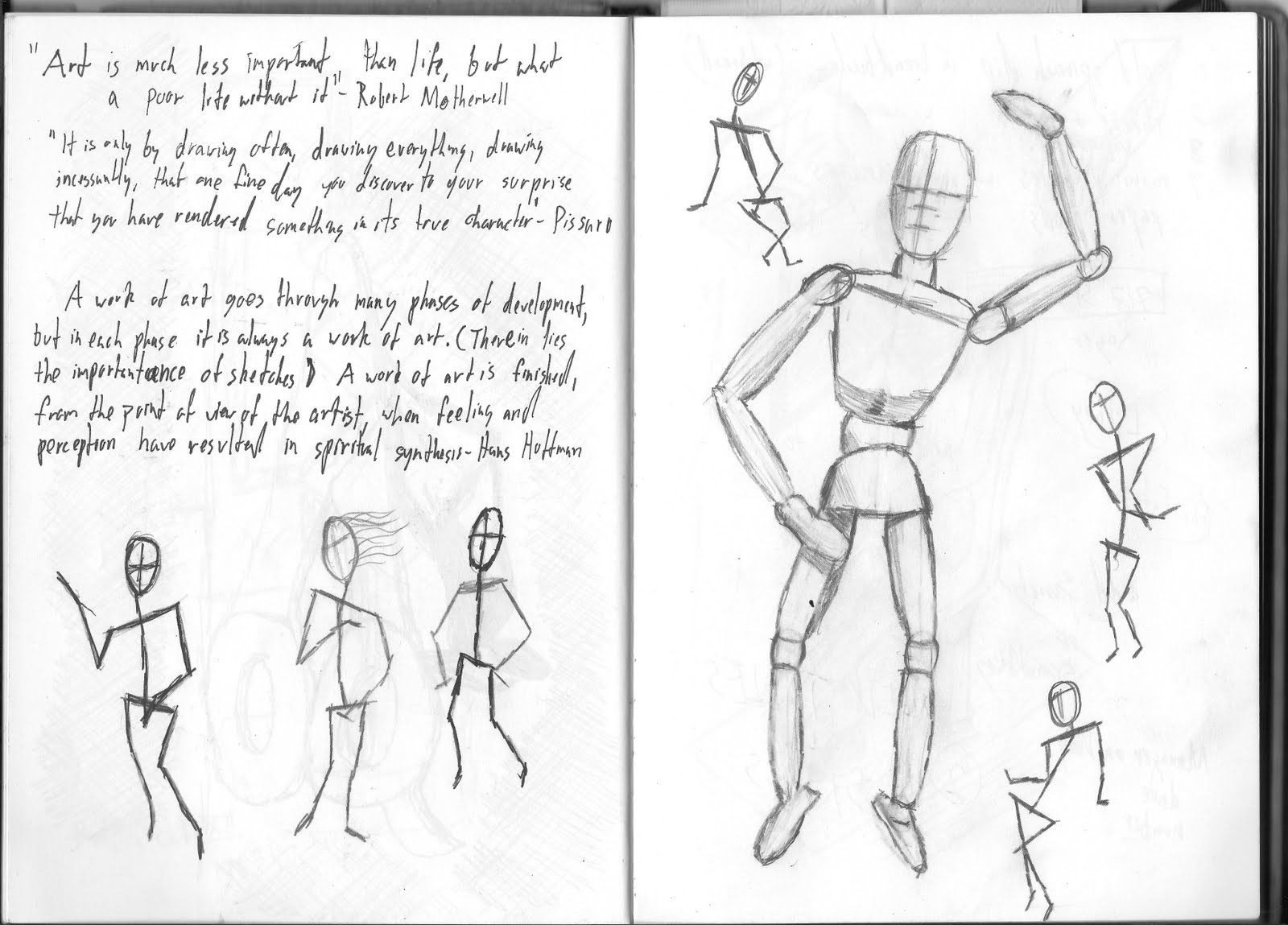

 And occasionally, no sketch book is handy, so I play with the material at hand.


 "The Danger of Innocence" 2010, Mixed Media Assemblage


 Recently, I have heard a comment regarding my wardrobe lately that has rather rankled me. It seems that my manliness has been called into question based off of my decision to wear a kilt, or as it was disparagingly referred to as a "man-skirt." I have therefore decided to pen a defense of a garment that needs no defense in my opinion, and clothed in the garment of discussion, I sat down to write on what I consider one of the manliest pieces of clothing in existence.


